

ars●bit will be holding a symposium, “New Developments in Art × Games: A Trajectory of Attempts to Disrupt the Boundaries Between Play and Art,” over two days, February 8th and 15th, 2026, at “404 Not Found” (Shibuya Sakura Stage 4F) in Shibuya, Tokyo.
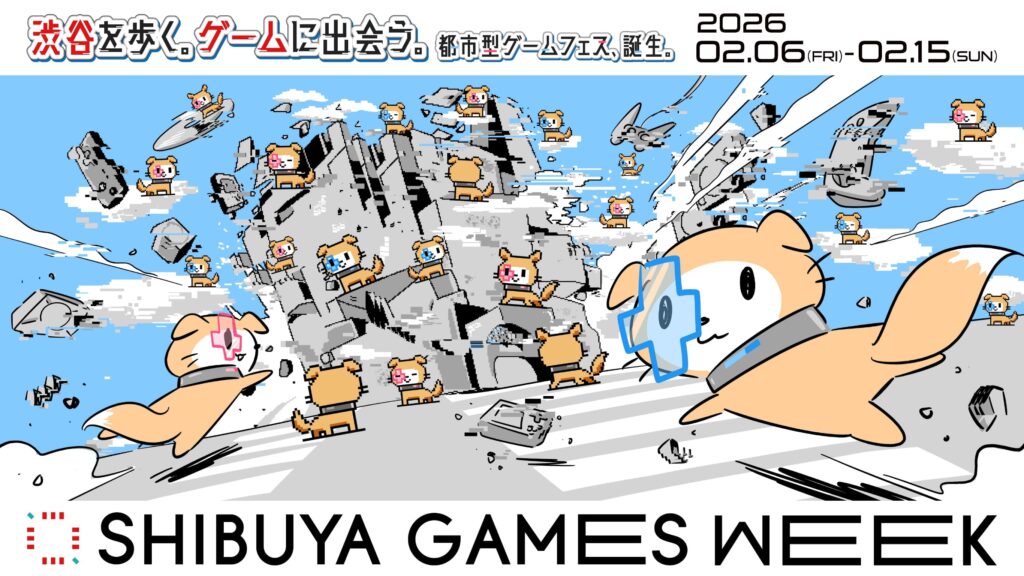
This symposium will be held as a linked talk session within the “404 Game Center” exhibition event, which will be held at the same venue during “SHIBUYA GAMES WEEK 2026 (SGW 2026)” (February 6th – 15th), an urban gaming festival that will turn the entire Shibuya area into a gaming festival. Key figures active in the interdisciplinary fields of games and art will discuss their attempts to pioneer new value.
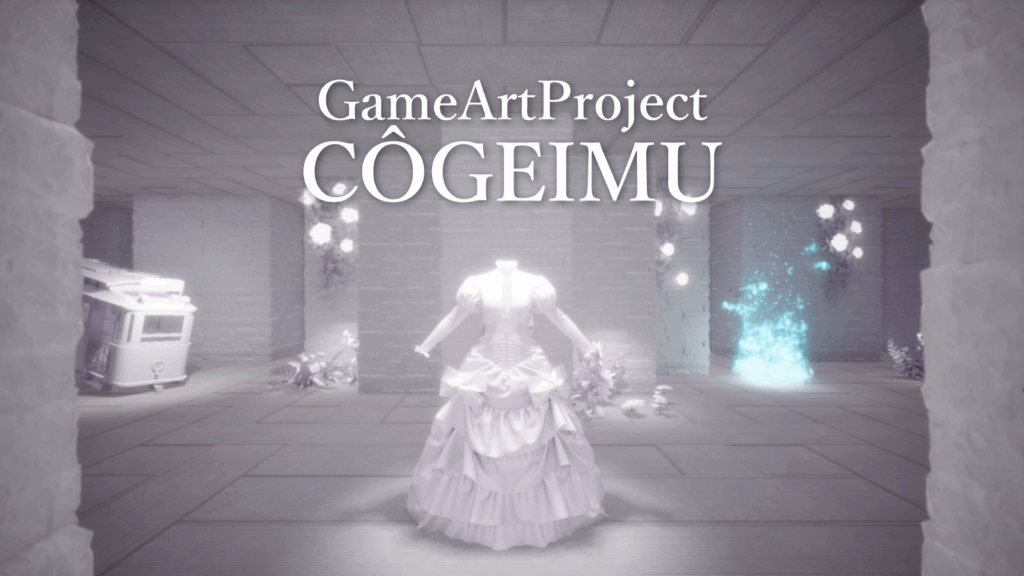
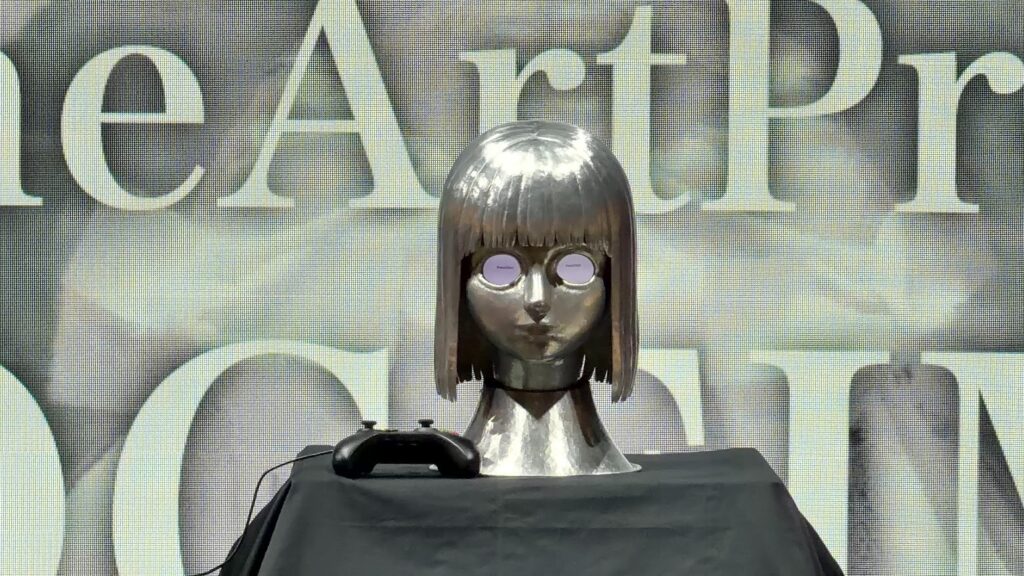
The February 8 (Day 1) session, immediately after the start of SGW, will provide an overview of “ars●bit,” a cross-disciplinary project centered on the fields of games and art that began full-scale operation in March 2025. The session will also feature presentations and activity reports from core creators in the art and games fields that the project supports and nurtures, including Daisuke Nishijima , who designed “Gaming Hachiko,” the overall image character for SGW 2026; Takakurakazuki, whose solo exhibition “Characters are Words” is currently being held at Hyper Museum Hanno; and the GameArt Project “CÔGEIMU,” a collaboration between KamiEna, Ryosuke SHIOMI , and Kaneko Takeru that seeks to combine crafts and games. Furthermore, the session will look ahead to the project’s overseas expansion into Asia, America, and Europe, including the “Japanese Indie Games” exhibition, which will be held at The Strong National Museum of Play in the United States from February 27, and the “ars●bit Selection,” an annual inter-award showcasing outstanding Japanese indie games. The session on February 15th (Day 2), the final day of SGW, will feature a reflective talk by artists participating in the participatory exhibition “Is This a Game? Exhibition 3,” which runs from February 11th to 14th as a separate program from “404 Game Center,” as well as a live demonstration of Eiko Yoshizumi‘s collaborative game art piece “Les Hommes du Désert (Fortnite Edition),” which uses the Fortnite game engine. The session will explore the boundaries and limits of games through experimental game production and playing, and delve deeper into attempts to connect them to relational art and academic research.
■Event Details
Name: ars●bit Symposium #3 “New Developments in Art × Games: A Trajectory of Attempts to Disrupt the Boundaries Between Play and Art”
Date and Time: Sunday, February 8, 2026, 1:00 PM – 6:00 PM / Sunday, February 15, 2026, 1:00 PM – 4:00 PM
Venue: 404 Not Found
1-4 Sakuragaoka-cho, Shibuya-ku, Tokyo 150-0031
Shibuya Sakura Stage SHIBUYA SIDE 4F
3-minute walk from the New South Exit of Shibuya Station on the JR Yamanote Line
https://www.404shibuya.tokyo
Participation and Cost: Advance registration required / Free admission, one drink included
https://sgw-404-arsobit-talkevent.peatix.com
Note: Some sessions will be filmed, and attendees’ backs may be captured on camera. Please be aware of this before applying.
Organizer: Shibuya Asobi-ba Production Committee / 404 Not Found

Collaborating Partner: Skeleton Crew Studio Inc.
Support by: Creator Support Fund

■Program
[Day 1: February 8th]
1:00 PM [Session 1] ars●bit Project Development Status 2025-2026
Masahiko Murakami,Yasutaka Toyokawa,Nilgiri,Daichi Nakagawa
2:10 PM [Session 2] Promoting “Art Game Centers” from Shibuya
Daisuke Nishijima,Takakurakazuki,Yasutaka Toyokawa
3:20 PM [Session 3] GameArtProject “CÔGEIMU”: Value Created by Combining Crafts and Games
Kamiena,Ryosuke SHIOMI,Takeru Kaneko
4:30 PM [Session 4] Conceive! ars●bit Selection: Japan’s Indie Game Awards Enter the World’s Largest Museum of Play
HANDSUM,Kosuke Urata,Hajime Kasai,Masahiko Murakami
[Day 2: February 15th]
1:00 PM [Session 5] “Is This a Game? Exhibition 3” Reflection Talk
Nilgiri & Exhibiting Artists
2:40 PM [Session 6] Experience Game Art that Transcends Divides: “Les Hommes du Désert: Castles in the Sand (Fortnite Edition)”
Eiko Yoshizumi
General Moderators: Daichi Nakagawa + YOHSUKE TAKAHASHI
[Talk Session Details]
■ A gathering of digital and analog playable exhibits by notable creators who are pushing the boundaries of gaming. Featured are new works by Daisuke Nishijima and Takakurakazuki, the crafts and games GameArt Project “CÔGEIMU,” and the analog game exhibition “Is This a Game? 3.”
This symposium, the third to report on the ars●bit project’s activities, will feature sessions focused on the latest work and activities by the project’s multidisciplinary creators, including artists scheduled to exhibit at SGW programs, including the “404 Game Center” based at 404 Not Found, and a preview of the event’s flagship program, “Is This a Game? 3.”
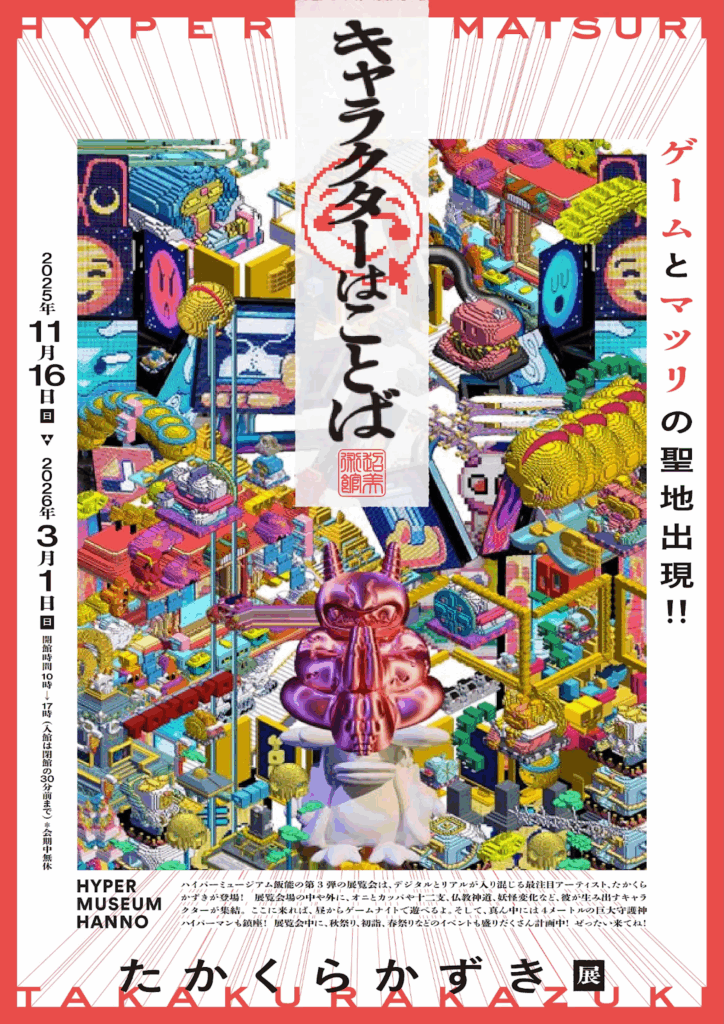
Daisuke Nishijima, who will be speaking at Day 1 [Session 2] on February 8, is a manga artist who has branched out into art and music, pursuing a multifaceted career. In recent years, he has branched out into video game development after exhibiting at the “art bit” exhibition at Hotel Anteroom Kyoto, and his work has been exhibited in numerous galleries and museums. Takakurakazuki continues to create works that cross the boundaries between contemporary art and video games, including pixel art, focusing on motifs inspired by Eastern philosophy. He is currently holding a solo exhibition, “Characters are Words.” Both artists will also be exhibiting arcade game-style works at PARCO MUSEUM TOKYO during the Singapore Week holidays.
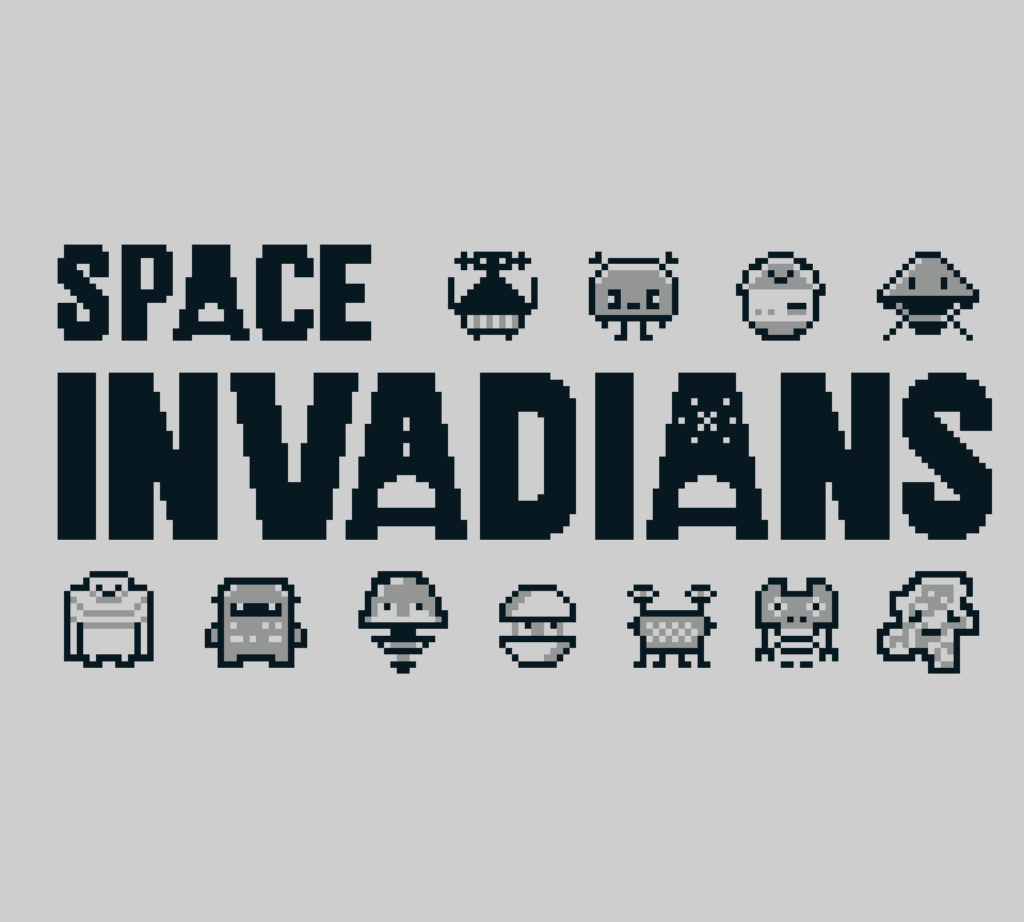
The session will feature explanations of each work, including Nishijima’s bullet-dodging shooter ‘SPACE INVADIANS’—whose new version will be exhibited at 404 Game Center—and will also explore the potential of “arcade games as art” or “game centers as art exhibitions.”
Session 3 will feature a presentation session on the “CÔGEIMU” GameArt Project, a combination of crafts and video games, with prototype works on display at 404 Game Center.
Game designer Kamiena and metalworker Ryosuke SHIOMI, joined by programmer Takeru Kaneko, will explore how the opposing artistic mediums of metalworking, which sculpts the timelessness of form, and video games, which design fleeting, dynamic interactions, interact to create new experiences in the present, while tracing the game’s updates since its debut last November.
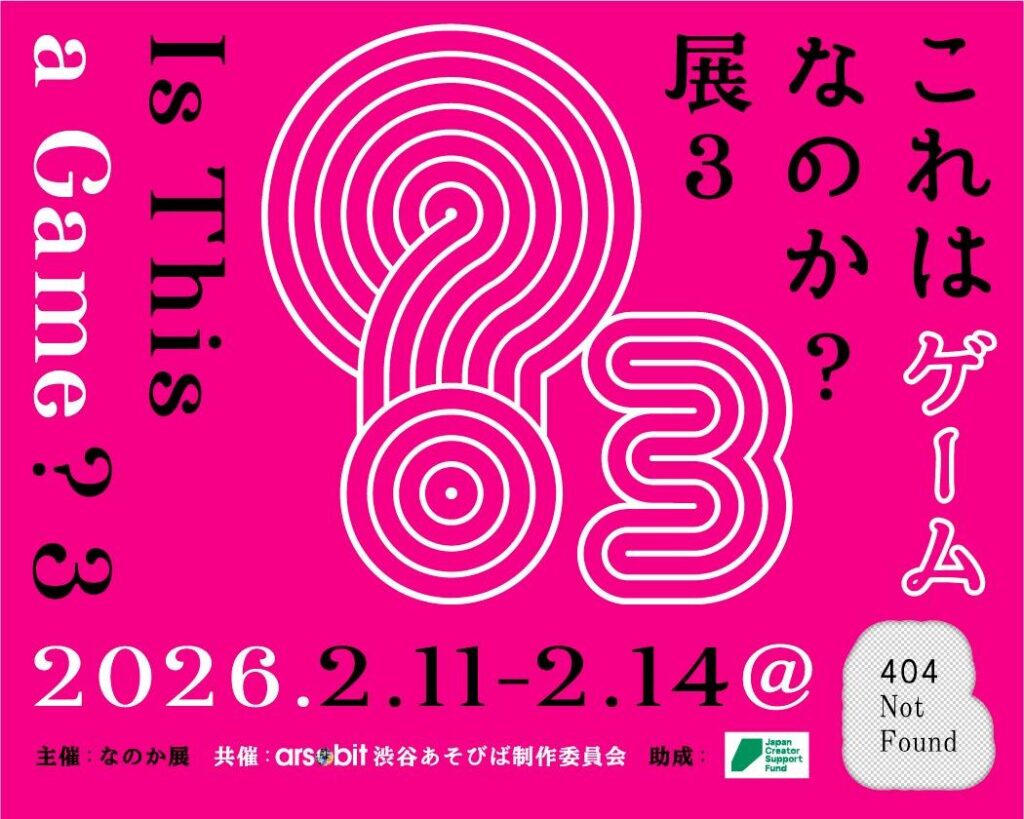
Session 5, on Day 2, February 15, will feature a retrospective talk on “Is This a Game? Exhibition 3,” scheduled for February 11-14 during SGW. Nilgiri is a unique game designer who continues to question the boundaries between analog games and participatory art, as well as rituals and curses. He has previously held two “Is This a Game? Exhibitions,” in 2018 and 2019. Participating creators who share his concept will discuss the play experiences they created during this four-day experimental project.
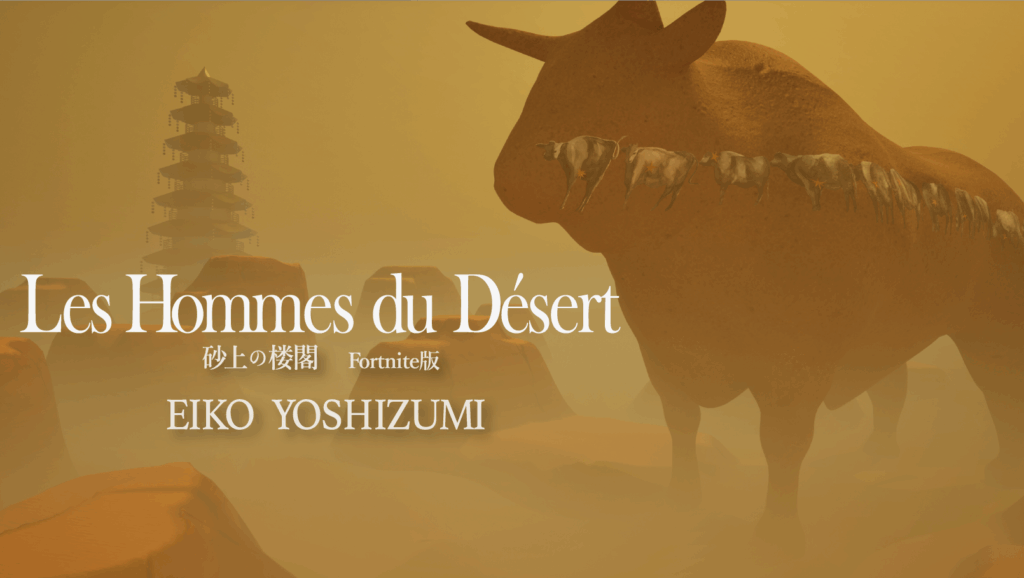
In the final session, Session 6, contemporary artist and visiting researcher at Ritsumeikan Center for Game Research, Eiko Yoshizumi, will introduce her series “Les Hommes du Désert,” which combines textiles, poetry, music, theater, video, video games, and XR devices, and will hold a demo of her Fortnite-like gameplay. Starting with the motif of the cow, a deity in many human myths from the Middle East and Mediterranean world, the cradle of ancient civilization, to East Asia, Yoshizumi’s work delves into contemporary issues through her artistic practice, which imagines the mythical possibilities of a possible past, as if our world shared the same mythical imagination in the distant past. Yoshizumi will also examine the nature of the play experience created by the cooperative game mechanics she has been developing through presentations at international conferences and other events, from the perspective of game research.
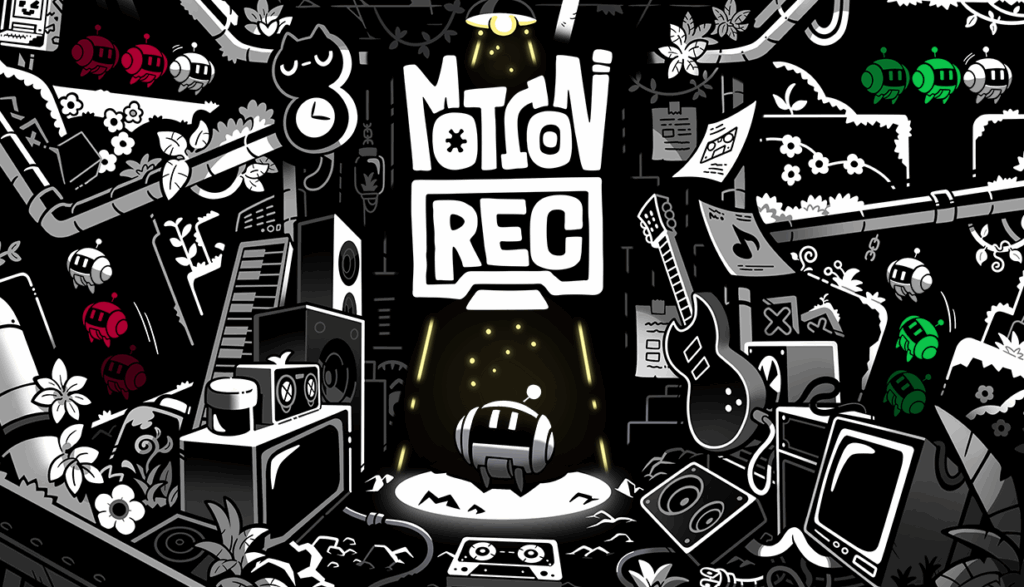
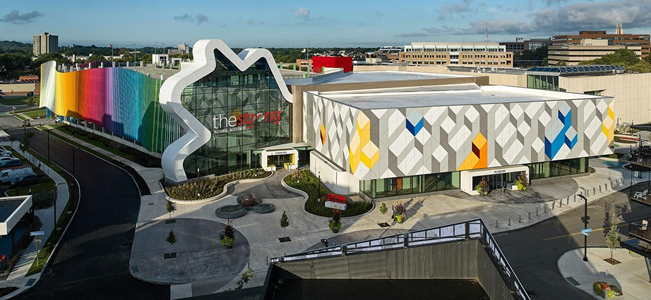
■An attempt to transcend the boundaries between games and art, from Japan to the world. HANDSUM’s “MotionRec” has been selected as the first award-winning game to be playable in the new “Japanese Indie Games” section at The Strong National Museum of Play in the United States!
The symposium will also feature a session discussing reports and prospects for new initiatives to support the international reach of ars●bit’s artists.
From August to October last year, “ART BIT MATRIX,” an independent exhibition co-curated with Takakurakazuki at the Mizuma Art Gallery in Singapore, was held.
In May 2026, to coincide with BitSummit, Japan’s largest indie game exhibition, a contemporary art and indie game exhibition, “art bit #6,” will be held at Hotel Anteroom Kyoto. The exhibition is also planning an international symposium, inviting key figures in art and games from across Asia.
Furthermore, in October, a group exhibition will be held as a culmination of the project, as part of the “Octobre Numérique” art festival in Arles, France, with the aim of promoting a new context for games and art to the world.
Building on the outcomes and roadmap of these projects, [Session 1] will feature discussions among ars●bit’s operational members—Masahiko Murakami, who has spearheaded BitSummit; Yasutaka Toyokawa, manager of Hotel Anteroom Kyoto and “art bit” curator; and critic Daichi Nakagawa, who oversees the concept—regarding future developments.
And starting next month on February 27th, The Strong National Museum of Play, the world’s largest museum of play and games in Rochester, New York, will be collaborating with the museum, Ritsumeikan Center for Game Studies (RCGS), and ars●bit to set up an exhibition corner dedicated to “Japanese Indie Games.”
The exhibition will feature a permanent exhibit looking back on the history of Japanese indie games across four eras, as well as a playable version of MotionRec, a puzzle action game that has been nominated for and won numerous game awards, including BitSummit. This exhibition has been conceived as the kickoff for the “ars●bit Selection,” a cross-sectional awards project that honors outstanding titles that have attracted attention each year at major indie game awards in Japan and introduces the next generation of creators to an international audience.
In Session 4, HANDSUM (shoma, m7kenji, kyoheifujita), creators of MotionRec, the project’s first year’s award winner, will introduce their work to this inter-award. In addition, Kosuke Urata, project director of the “Kami-Game Evolution” and associate professor at Tokyo International University of Technology, and Hajime Kasai, an ars●bit training recipient who conducts interviews and writes about a variety of genres, mainly games, will be joining us to discuss the nature of this inter-award and its developments from next year onwards.
■Inquiries
If you have any questions about this symposium, please use the “404 Not Found” inquiry page.
https://www.404shibuya.tokyo/inquiry/