
Beyond Creators Project〈ars●bit〉 cooperated with The Strong National Museum of Play and the Ritsumeikan Center for Game Studies (RCGS) on a joint project to introduce the history and present state of Japanese indie games to the world with the permanent exhibition, Japanese Indie Games. The exhibition will be open starting February 27, 2026, and will run for at least three years.
The Strong National Museum of Play is the world’s largest museum of ‘play,’ based in Rochester, New York, USA. It systematically collects and exhibits valuable collections related to play from all times and places—from traditional toys and dolls to cutting-edge video games and XR technology—as a museum linked to academic research. It is also characterized by providing large-scale play facilities such as a carousel and a zipline, allowing visitors to experience it like a theme park.
The Japanese Indie Games exhibition is located in a corner of the “HIGH SCORE” themed floor, where visitors can enjoy learning about the history of video games. This floor is composed of various types of exhibitions, including playable exhibits of Hall of Fame titles that color game history, such as Super Mario Bros. and Street Fighter II; the trajectory of game technology’s progress from the dawn of computer technology to the present; and special panels focusing on the achievements of female game developers and their relationship with society. Within this grand exhibition structure, an ‘Indie Arcade’ is set up, where globally acclaimed indie game titles can be played on special cabinets, and the Japanese Indie Games exhibit was established as an adjacent corner.
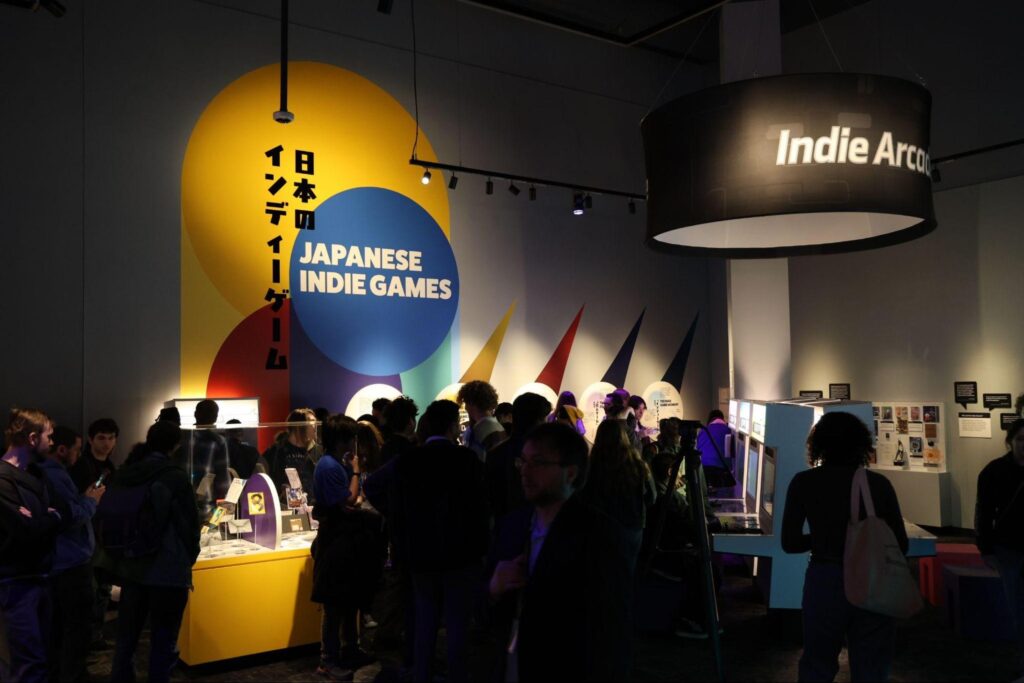
This corner is comprised of two exhibition sections: “History of Japanese Indie Games,” which introduces the history of independent Japanese games through explanatory panels and physical materials, and “ars●bit Selection,” which selects the latest title each year from nominated works in domestic indie game awards and makes it playable on a special arcade cabinet for one year. The selection for the latter is conducted jointly by the ars●bit project and The Strong National Museum of Play, and the title for the first year (2025) was the action puzzle game MotionRec by HANDSUM.
Furthermore, an associated exhibit showcasing the achievements of four female game creators who were active from the dawn of the Japanese game industry and who significantly influenced subsequent video game culture has been installed: the “Pioneering Female Game Creators in Japan” showcase, introduced through explanatory panels and physical exhibits.
History of Japanese Indie Games
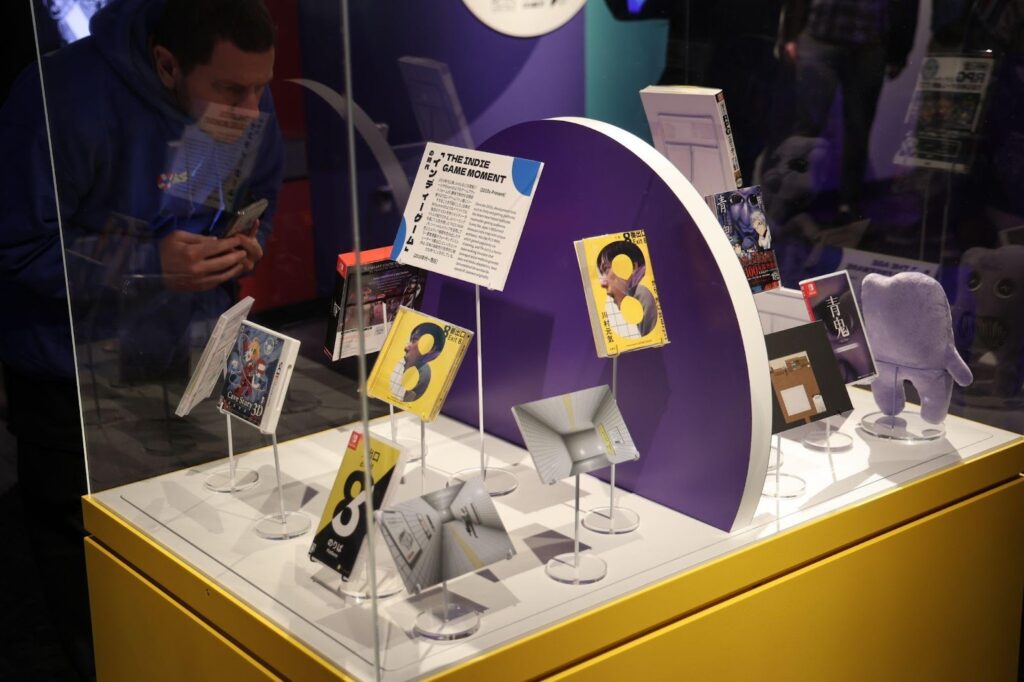
The “History of Japanese Indie Games” exhibition section divides the history of independent Japanese games over the past 40 years into the four periods listed below. Packages, media mix works, and related merchandise of representative creators and works from each era are housed in two showcases.
[Periods and Exhibited Creators/Works]
The Era of Homemade Games (1970s–1980s): Koichi Nakamura, Door Door
The Rise of Doujin Games (1990s–2000s): Team Shanghai Alice (ZUN), Embodiment of Scarlet Devil, and others
The Age of Freeware (2000s–2010s): noprops, Ao Oni, and others
The Indie Game Moment(2010s–Present): KOTAKE CREATE, The Exit 8, and others
The curation of these exhibits is supervised by RCGS and critic/editor Daichi Nakagawa, based on previous initiatives in Japan, such as the feature on self-made games exhibited at the Dwango game event Tokaigi: Game Party Japan 2015.
Additionally, the associated exhibition “Pioneering Female Game Creators in Japan” introduces the achievements of four female game creators who were active in the dawn of the Japanese game industry and had a significant impact on subsequent video game culture.
The individuals highlighted are Keiko Erikawa, co-founder of Koei who established the “Otome Game” genre with Angelique; Rika Suzuki, who founded Riverhillsoft and planned/wrote the scenarios for numerous mystery adventure games such as Murder Club and Another Code; Yuriko Keino, a key figure in the sound of Namco’s golden age with titles like Dig Dug and Xevious; and Kazuko Shibuya, who contributed to the establishment of Square’s brand by creating dramatic graphic art for early Final Fantasy series and others. The exhibition showcase contains representative works created by them.
ars●bit Selection 2025: HANDSUM MotionRec
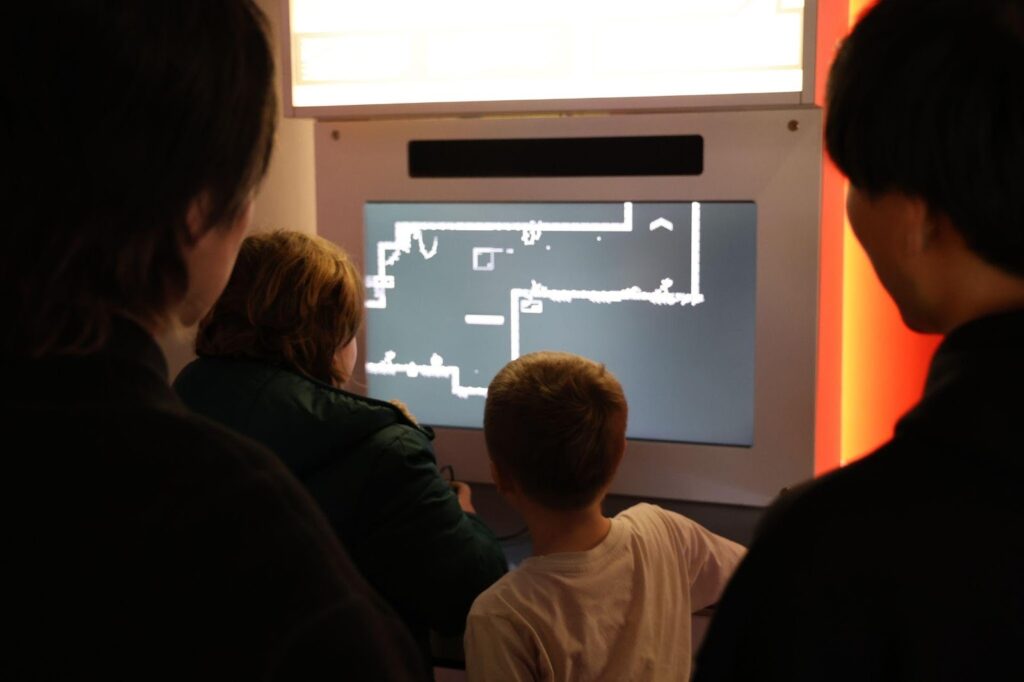
In the “ars●bit Selection” exhibition section, the title selected for the inaugural year (2025) is MotionRec, an action puzzle game developed by indie developer HANDSUM (Director: shoma, Graphic: m7kenji, Composer: kyoheifujita), which is displayed as a playable exhibit.
MotionRec is a 2D puzzle action game where the player navigates a collapsed world using the ability to record and replay their movements. The recording ability can track movements from walking to jumping. The appeal of the game lies in using this ability to utilize stage gimmicks and proceed forward.
Furthermore, this title was released with the support of indie game development assistance, which has recently been developed in Japan. MotionRec was selected for the 4th term of the iGi indie Game incubator, receiving six months of development support. It garnered significant attention from many publishers at the pitch event, ultimately leading to a contract with PLAYISM.
For this exhibition, The Strong National Museum of Play created an original arcade cabinet for MotionRec. It is being exhibited in a playable format, allowing museum visitors to experience the cutting edge of Japanese indie games.
Commemorative Symposium for the Japanese Indie Games Exhibition by RCGS × ars●bit × The Strong National Museum of Play
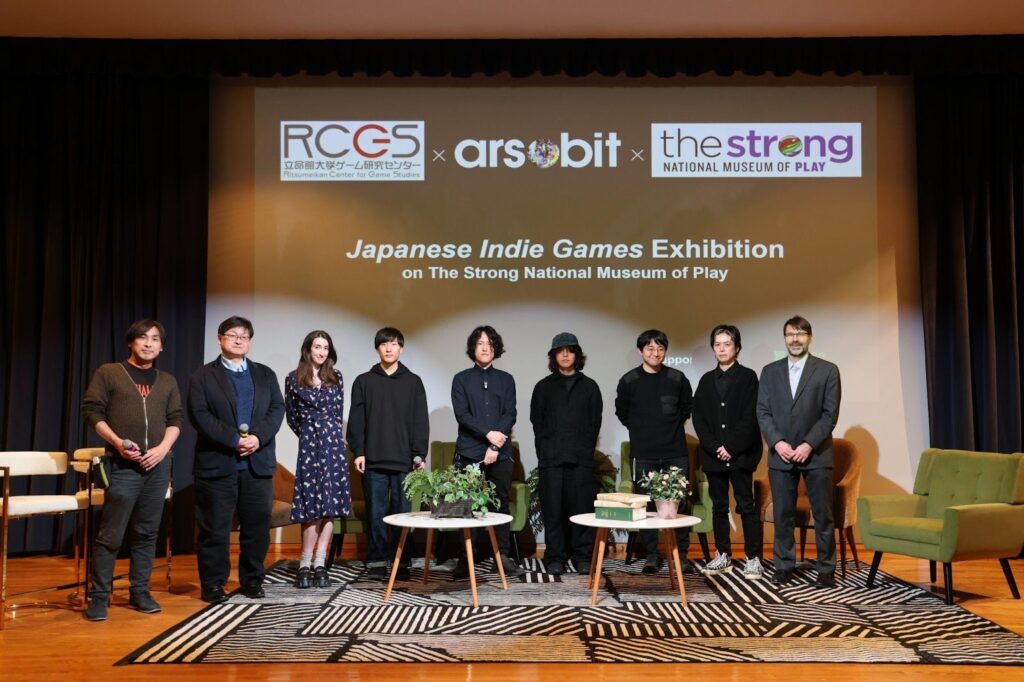
On February 27, when the Japanese Indie Games exhibition opened, a commemorative symposium, which served as the opening event, was held in the conference hall inside The Strong National Museum of Play.
15:00 Opening Remarks: Overview of Each Related Organization and the Purpose of This Exhibition

Jon-Paul Dyson (The Strong National Museum of Play)
Akinori Nakamura (Professor, Ritsumeikan University College of Image Arts and Sciences, RCGS)
Masahiko Murakami (Skelton Crew Studio CEO, BitSummit Director, Shibuya Asobiba Production Committee / ars●bit Representative Director
The event’s opening featured greetings from the representatives of the three institutions that realized this exhibition. First, Jon-Paul Dyson, Vice President of The Strong National Museum of Play, gave a congratulatory address on the long-standing collaboration between the museum and Ritsumeikan University. Akinori Nakamura introduced the activities of RCGS, which spearheads game research in Japan. Finally, Masahiko Murakami explained the development of Japanese indie games through the operation of BitSummit, the start of the “art bit” exhibition in Kyoto (a planned exhibition combining contemporary art and indie games), and the process by which the ars●bit project was launched after receiving a grant from the Creator Support Fund.
15:10 Exhibition Overview
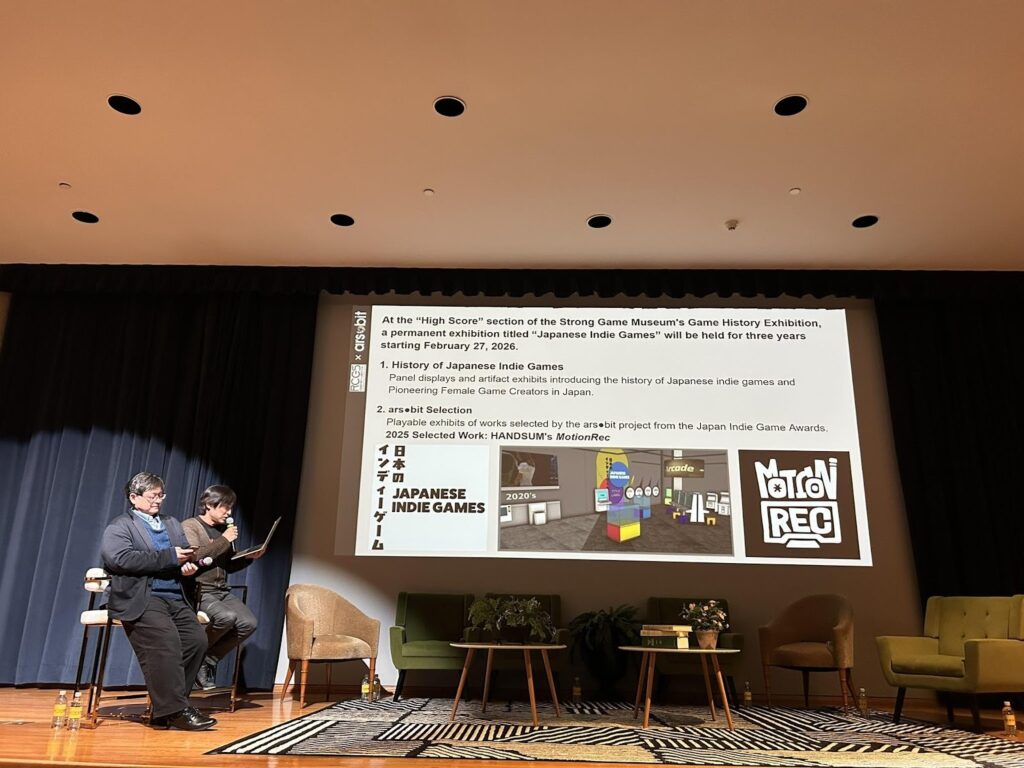
Daichi Nakagawa (Critic / Editor, RCGS Researcher, ars●bit Director)
Next, Nakagawa, who led the joint curation of this exhibition, explained the exhibition overview. He introduced the four periods in the “History of Japanese Indie Games” and their characteristics, the backgrounds of the four pioneers highlighted in the associated exhibition “Pioneering Female Game Creators in Japan,” and the purpose of the “ars●bit Selection” along with the reasons for selecting MotionRec.
15:35 Panel Discussion: The Appeal of MotionRec and Characteristics of Japanese Indie Games
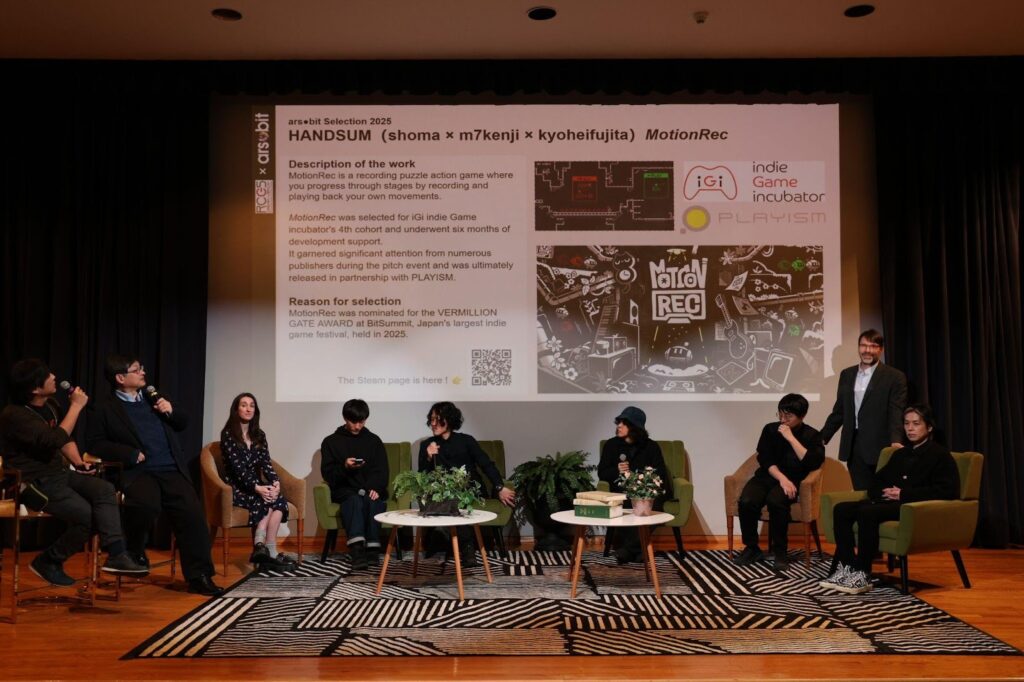
HANDSUM (shoma, m7kenji, Fujita)
Tomo Kihara (Artist/Game Creator)
Akinori Nakamura
Daichi Nakagawa
Masahiko Murakami
Lindsey Kurano (The Strong National Museum of Play)
The discussion proceeded with Nakagawa moderating, following a presentation of MotionRec by the developers from HANDSUM. Relevant parties, including Lindsey Kurano, Curator from The Strong National Museum of Play, and Dr. Nakamura, provided comments on the selection points of the work, its positioning within indie games, and the characteristics of Japanese indie game history emerging from it, based on three themes: “The Minimal Aesthetic and the Universality of Non-Verbal Game Mechanics,” “Characters and Lore,” and “Transmedia expansion.” Furthermore, Tomo Kihara, an artist/game designer currently staying in New York and a recipient of the WAN project (a support project in the media arts field and a grant-supported program of the same Japan Creator Support Fund as ars●bit), joined the discussion, leading to further developmental dialogue.
16:30 Opening Ceremony (Dedication Ceremony)
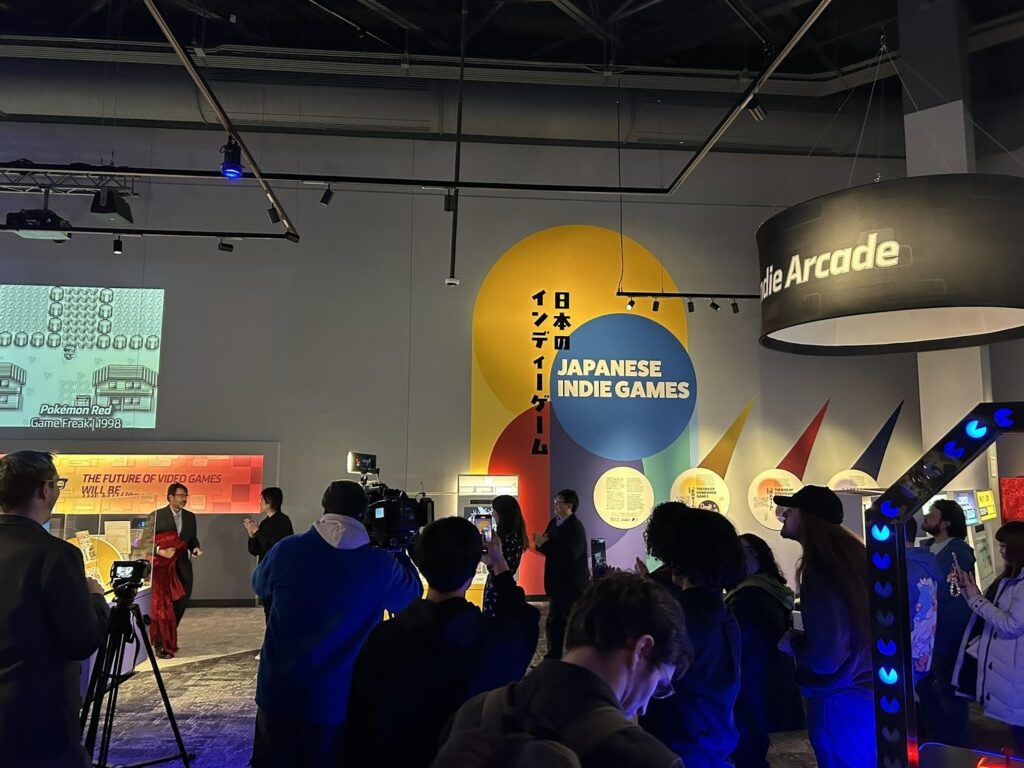
Following the symposium, participants and the audience moved to the HIGH SCORE exhibition area, where the dedication ceremony for the exhibit case took place. This event was covered by Rochester television stations and was reported across the United States in the evening news (see related articles).
Exhibition Details
Name: Japanese Indie Games 日本のインディーゲーム
Period: February 27, 2026 – End Date Undetermined
Organizer/Venue: The Strong National Museum of Play
1 Manhattan Square, Rochester, New York 14607
Cooperation: Ritsumeikan Center for Game Studies (RCGS) / ars●bit (Shibuya Asobi-ba Production Committee)
Supported by: Japan Creator Support Fund
History of Japanese Indie Games 日本のインディーゲームの歴史
Curation Cooperation: Ritsumeikan Center for Game Studies (RCGS) / Daichi Nakagawa / Daichi Saito
Main References: Dwango “自作ゲーム大年表 (Homemade Games Chronology)Homemade Games Chronology)” (2015)
Pioneering Female Game Creators in Japan 日本における先駆的な女性ゲームクリエイターたち
Curation Cooperation: Ritsumeikan Center for Game Studies (RCGS) / Daichi Nakagawa / Game History Study Group
Main References: Kentaro Fukuchi, “日本のゲーム黎明期に活躍した日本の女性達 (Japanese Women Who Were Active in the Dawn of the Japanese Game Industry)“
Hotate Inaba et al., “信長から乙女ゲームまで… シブサワ・コウとその妻が語るコーエー立志伝 「世界初ばかりだとユーザーに怒られた(笑)」 (From Nobunaga to Otome Games… Kou Shibusawa and His Wife Talk About Koei’s Success Story: ‘Users got angry because everything was a world first :)’ ”
ars●bit Selection
2025 Selected Work: HANDSUM inc. MotionRec
Selection Committee: ars●bit(Masahiko Murakami, Daichi Nakagawa, Yasutaka Toyokawa) and The Strong National Museum of Play

◯Related Articles
GALLERY: Japanese indie gaming takes center stage at Strong National Museum of Play(WHAM 2026.2.27)
The Strong National Museum of Play opens new Japanese Indie Gaming exhibit(Hunter Wright News10NBC 2026.2.28)
Japanese Indie Games Exhibit at The Strong (MIMI OKABE 2026.3.1)